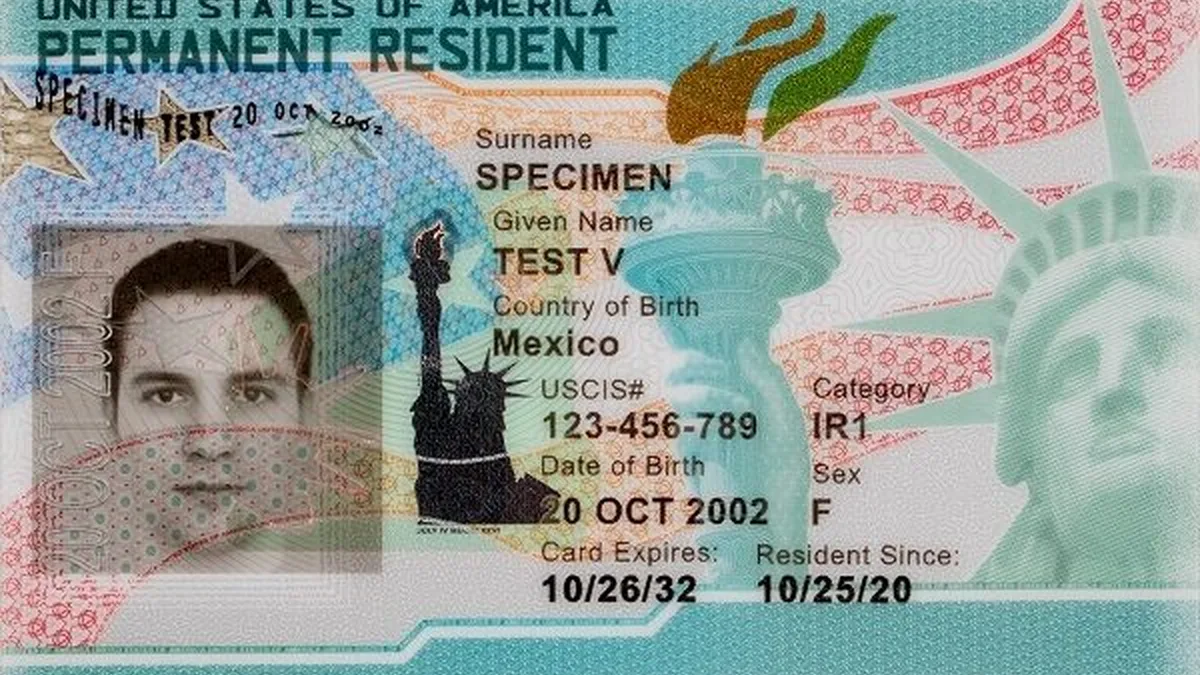
Renew Green Card
| Visa category | Family-based immigrant visa |
|---|---|
| Queue behind it | Immediate Relative (IR) category |
| Policy change that moved it | Child Status Protection Act (CSPA) |
| Original use | To replace a Permanent Resident Card that is expiring or will expire |
| Eligibility | Lawful Permanent Resident with a valid, expired, or expiring 10-year card |
| Processing form | Form I-90, Application to Replace Permanent Resident Card |
| Processing agency | U.S. Citizenship and Immigration Services (USCIS) |
Origin and history
The Renew Green Card process originates from the United States immigration system and is a direct administrative consequence of the original Permanent Resident Card's design. The Green Card itself was formally established by the Alien Registration Act of 1940, though the modern card format and the systematic requirement for renewal came about decades later. The initial cards issued in the mid-20th century did not carry expiration dates, making renewal unnecessary. A major policy shift occurred in 1989 when the Immigration and Naturalization Service (INS) began issuing redesigned, machine-readable cards with ten-year validity periods to combat fraud and maintain accurate records. This change instituted the recurring renewal requirement for all conditional and permanent residents to maintain proof of their lawful status. The renewal process is not a new visa category but a mandated procedure administered by U.S. Citizenship and Immigration Services (USCIS), the successor to the INS, to keep the physical document current.
What it is for
Renewing a Green Card is the mandatory process for a Lawful Permanent Resident (LPR) to obtain a replacement Permanent Resident Card before the current one expires. Its primary purpose is to provide continuous, valid proof of an individual's authorization to live and work permanently in the United States. The card itself serves as the key identity document for employment verification under Form I-9 and for re-entry into the United States after international travel. A renewed card does not alter or extend the underlying permanent resident status, which is generally for life unless abandoned or revoked, but it updates the security features and biometric data on the physical credential. Failure to renew the card can lead to practical difficulties such as an inability to legally start a new job, challenges in obtaining a driver's license or certain benefits, and complications when returning from abroad. The renewal process also allows USCIS to maintain an updated address and record for each permanent resident.
How to renew Renew Green Card
- Determine your eligibility window, which opens six months before your Green Card's expiration date. 2. Prepare Form I-90, Application to Replace Permanent Resident Card, ensuring you use the latest edition available on the USCIS website. 3. Gather required supporting documents, which typically include a copy of your expiring or expired Green Card and any documents relevant to your specific filing category. 4. Provide a passport-style photograph taken within the last six months that meets USCIS specifications. 5. Calculate and pay the required filing fee and biometric services fee, checking the USCIS website for the current amounts, as they are subject to change. 6. Submit the complete Form I-90 package, either online through your USCIS account or by mailing a paper application to the address specified in the form instructions. 7. After filing, wait for a receipt notice and later, a separate appointment notice to attend a biometrics appointment at a USCIS Application Support Center. 8. Attend the biometrics appointment to have your photograph, signature, and fingerprints taken. 9. Respond promptly to any Requests for Evidence (RFE) from USCIS if they require additional information or documentation. 10. Receive your new Permanent Resident Card by mail once the application is approved.
Renew Green Card requirements
The core requirement is that the applicant must currently be a Lawful Permanent Resident of the United States. The applicant must file Form I-90 within the appropriate timeframe, typically when their card expires or will expire within six months, or if it was lost, stolen, or damaged. A mandatory requirement is the submission of a copy of the front and back of the expiring or expired Permanent Resident Card, unless it was never issued or is unavailable. All applicants must pay the legally mandated filing fee and biometric services fee, though fee waivers are available in very limited circumstances based on an inability to pay. Applicants are required to attend a biometrics appointment unless they are over a certain age or have a qualifying medical condition, as this appointment is how USCIS captures updated biometric identifiers. Additional documentary requirements may apply for specific situations, such as a legal name change, which would require court documents, or if the card was issued with incorrect data due to a USCIS error.
Renew Green Card processing time
The processing time for a Green Card renewal is variable and is officially published by USCIS on its website, showing historical ranges for the Form I-90. These processing times are not guaranteed and can fluctuate significantly based on application volume, the complexity of the case, and the specific USCIS service center handling the file. As a widely-established fact, processing often extends beyond a year, and applicants should plan for a timeline of several months to well over a year from filing to receipt of the new card. The issuance of a receipt notice upon filing provides proof of continued lawful status for up to 24 months while the renewal is pending, which is crucial for employment and travel. Applicants can check their case status online using the receipt number provided by USCIS, but inquiries on delayed cases can typically only be made after the published processing time has passed. It is a common and serious mistake to assume processing will be quick and to let one's Green Card expire without having filed for renewal well in advance.
Pros and cons
A primary advantage of successfully renewing a Green Card is the maintenance of uninterrupted proof of status, enabling smooth employment verification, domestic travel, and access to benefits. The process, when completed, provides an updated, secure document with modern anti-fraud features. A significant con is the lengthy and uncertain processing time, which can create anxiety and practical hurdles, especially if the individual needs to travel internationally or change jobs during the delay. The financial cost, comprising filing and biometric fees, is a concrete disadvantage and can be a burden, particularly for families needing to renew multiple cards simultaneously. A common and critical mistake is procrastination, leading to a last-minute filing that risks the card expiring before the renewal is initiated, potentially jeopardizing job status and travel plans. Individuals often regret not renewing sooner when they face difficulties with employers or at airports due to an expired card, even with a receipt notice, as not all officials are uniformly familiar with the extension rules.
Who it suits
The Green Card renewal process is a mandatory procedure for all Lawful Permanent Residents who possess a card with an expiration date, regardless of their personal background, occupation, or future plans. It particularly suits proactive individuals who file their renewal application as soon as the six-month window opens, as this group best mitigates the risk of an expired document. This process is essential for permanent residents who intend to travel outside the United States, as airlines and immigration officials at ports of entry require a valid, unexpired Green Card or proof of a pending renewal for re-entry. It is also critically important for employed individuals, as new employment under Form I-9 requires a valid, unexpired Green Card or the combination of an expired card and the I-90 receipt notice. The renewal suits those who have had changes in biographic information, such as a legal name change, as it formally updates the government record and the physical evidence of status. It is a necessary step for any permanent resident who wishes to avoid the legal and practical complications that arise from possessing an expired proof of their lawful status in the country.
Latest Renew Green Card news
Latest reporting

CSPA Protects Aging-Out Children in Employment-Based Green
The Child Status Protection Act can preserve green card eligibility for derivative children who turn 21, using a special age calculation and a policy

U.S. Warns EB-1 Green Card Numbers for India May Run Out
The State Department warns high demand could exhaust EB-1 visa numbers for Indian applicants before the fiscal year ends on September 30, 2026...

DHS Expands Green Card Eligibility for Diplomats' US-Born
A new rule allows certain U.S.-born children of foreign government and international organization employees to apply for permanent residency via Form

USCIS DV Hold Blocks Domestic I-485 Approvals
USCIS has placed pending domestic adjustment applications from Diversity Visa selectees under a policy hold, blocking final green card approvals...

DHS Expands Green Card Eligibility for Children of Foreign
A new rule allows children born in the U.S. To certain foreign government employees to register for lawful permanent resident status, replacing a...

USCIS Gains Credit Report Access for Green Card Sponsors
A new edition of Form I-864 allows U.S. Immigration authorities to request a sponsor's credit report and score, effective August 31, 2026.