Court Decisions And Injunctions
| Policy Name | Court Decisions And Injunctions |
|---|---|
| Visa Category | EB-2 |
| Queue Affected | India |
| Policy Change | USCIS Policy Manual Update |
| Where it Applies | United States employment-based immigration |
| Governing Body | U.S. Citizenship and Immigration Services (USCIS) |
| Effect | Alters visa availability for certain applicants |
| Legal Basis | Administrative Procedures Act |
Overview
Court Decisions And Injunctions refers to the established legal and administrative framework governing how judicial rulings, particularly class-action lawsuits and preliminary injunctions, directly impact the operation of specific visa categories within the United States immigration system. This framework dictates that when a federal court finds a government policy unlawful or orders specific relief, the relevant agencies must comply, often resulting in the creation of new application procedures or the reopening of lapsed visa programs. The policy is not a visa category itself but a procedural mechanism that can alter eligibility criteria, processing order, and the very availability of certain visas. Its effect is most visible in employment-based and diversity visa contexts, where litigation frequently arises from statutory delays or perceived unfairness in allocation. The existence of this framework means that the visa queue is not solely a product of legislative and executive action but is also subject to judicial intervention. Understanding this interplay is crucial for applicants and practitioners, as a court decision can instantly change the landscape for thousands of pending cases.
History
The legal principle that court decisions can compel administrative action on visas originates from the foundational U.S. legal concept of judicial review, established centuries ago. Its specific, recurrent application to immigration visa administration, however, became prominent in the late 20th century as immigration volumes increased and litigation became a more common tool for interest groups. The framework solidified through a series of landmark class-action lawsuits filed against the former Immigration and Naturalization Service (INS) and its successor, the Department of Homeland Security (DHS), throughout the 1990s and 2000s. These cases often challenged systemic delays, errors in visa allocation, or the improper rejection of eligible applicants. A stable, widely-established pattern emerged where plaintiffs would seek a preliminary injunction to halt a damaging policy or a writ of mandamus to force agency action, with courts frequently granting such relief. This established litigation as a parallel, reactive channel for modifying visa policy outside of Congress. The history is thus one of an evolving adversarial process where the judiciary acts as a check on executive branch administration of complex, quota-driven immigration laws.
How it works today
Today, the process typically begins when a group of plaintiffs files a class-action lawsuit in a U.S. federal district court alleging that a specific visa-related practice violates the Immigration and Nationality Act (INA) or the Administrative Procedure Act (APA). If the court agrees, it may issue a declaratory judgment stating the policy is unlawful and often accompanies this with an injunction, which is a court order compelling or prohibiting specific actions by U.S. Citizenship and Immigration Services (USCIS) or the Department of State (DOS). For example, a successful lawsuit may result in an injunction ordering the government to reprocess a set of denied applications or to reserve a specific number of visas for a defined plaintiff class. The agencies are legally bound to comply, leading to the publication of new guidance, the creation of dedicated filing windows, and the allocation of visas outside the standard queue. These court-mandated programs usually have strict eligibility cut-offs and filing deadlines tied directly to the plaintiff class definition. The ongoing management of such injunctions requires constant coordination between the Department of Justice, which defends the government, and the operational immigration agencies to implement the court's orders.
Why it matters
This framework matters because it provides a critical, though unpredictable, corrective mechanism for systemic failures within the visa allocation system. For individuals stuck in multi-decade backlogs or harmed by consistent agency error, litigation often represents the only viable path to remedy. It holds administrative agencies accountable to the letter of the immigration statutes passed by Congress, ensuring that bureaucratic discretion does not override statutory rights. The policy also matters because it can effectively create sub-categories within visa quotas, prioritizing specific groups of applicants based on court-defined criteria rather than their original petition date. This introduces a layer of complexity for policymakers, as the total annual visa quota can be partially consumed by court-mandated issuances, affecting wait times for everyone else. Furthermore, it shapes legal and strategic planning for immigration attorneys, who must monitor active litigation as closely as they monitor regulatory changes. Ultimately, it underscores that the U.S. immigration system is governed by three co-equal branches of government, not just the executive agencies that administer it.
Common misconceptions
A common misconception is that a favorable court decision automatically benefits all applicants within a broad visa category, when in reality relief is almost always strictly limited to the certified plaintiff class defined in the lawsuit. Another widespread error is the belief that filing an application under a court-mandated program is a straightforward administrative task, while these processes are often highly technical and fraught with strict, non-extendable deadlines that differ from standard procedures. Many mistakenly assume that an injunction permanently changes the underlying law or policy, but it often only provides a one-time remedy for a specific group, leaving the root statutory or regulatory issue unaddressed for future applicants. There is also a misconception that such lawsuits are quick resolutions, whereas they can take years to litigate, and the subsequent implementation of the court's order can add further significant delays. Applicants frequently misunderstand that success in one district court case does not create a binding national precedent, though it may influence other courts or lead to a voluntary government-wide policy change. Finally, some believe the government will always comply swiftly and seamlessly with a court order, but the history of these cases shows that implementation can be slow, contested, and sometimes require further court motions to enforce.
Latest Court Decisions And Injunctions news
Latest reporting
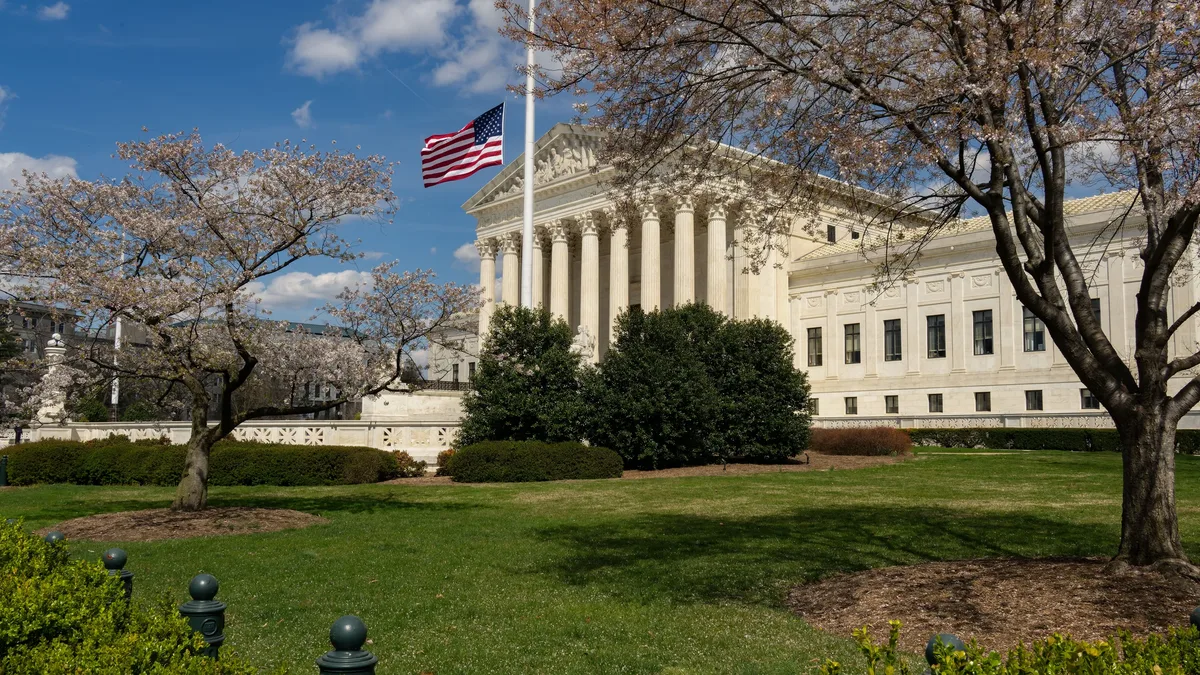
Supreme Court Allows SAVE Database for Voter Citizenship
The Supreme Court's 6-3 ruling revives the Trump administration's expanded SAVE database for targeted voter citizenship verification, overturning a...

Federal Court Sanctions IRCC Over Repeated Visa Refusals
A Federal Court judge has sanctioned Immigration, Refugees and Citizenship Canada for repeatedly refusing a couple's visitor visa applications on...

ACLU Sues Hartford Immigration Court Over Withheld Case
The ACLU of Connecticut sued federal immigration officials, alleging they withheld court records from a three-month period in 2026 and citing a 99.8%

Korean Court Overturns Visa Denial Over Traffic Fine
A South Korean district court has canceled the visa extension refusal for a Sri Lankan worker, ruling that immigration officials unlawfully relied...

IRCC Faces Mandamus Lawsuits Over Citizenship Certificate
Immigration, Refugees and Citizenship Canada is facing potential court-ordered action over extreme processing delays for citizenship certificates...

USCIS Resumes Diversity Visa Processing After Court Order
U.S. Citizenship and Immigration Services has resumed normal review of FY 2026 Diversity Visa adjustment cases following a federal court order that...