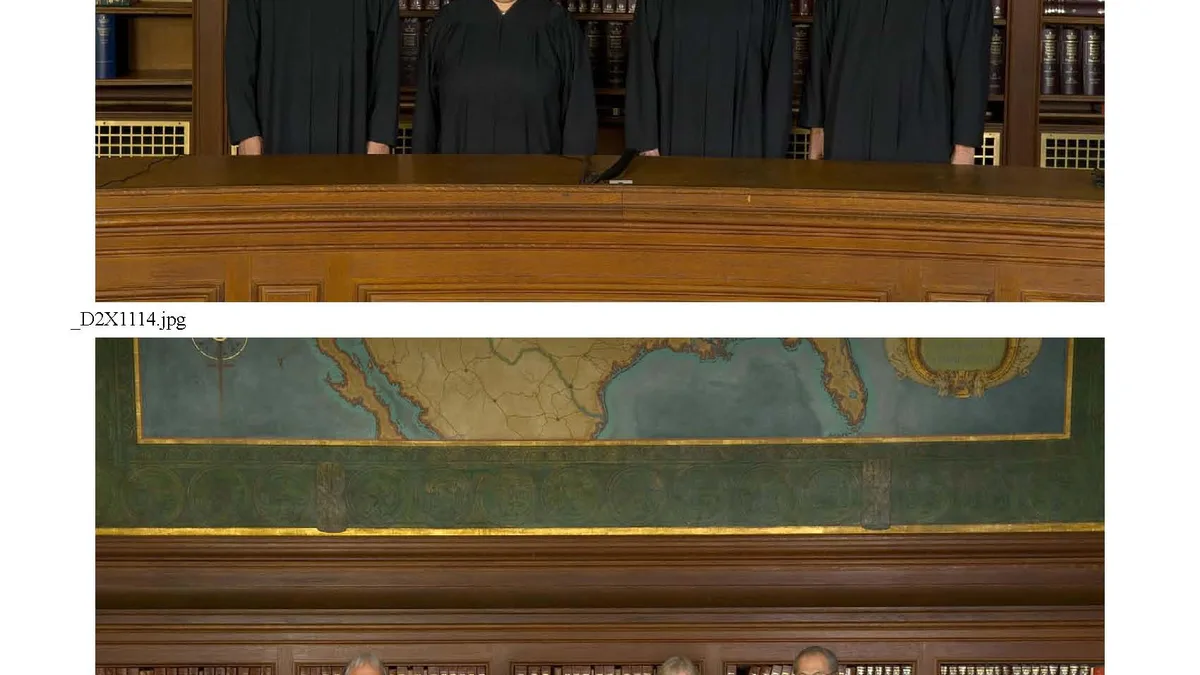
Administrative Appeals Office
| Jurisdiction | United States |
|---|---|
| Original use | Review of administrative immigration decisions |
| Administering agency | U.S. Citizenship and Immigration Services |
| Review type | Administrative appellate |
| Subject matter | Immigration benefits petitions and applications |
| Precedent designation | Non-precedent and precedent decisions |
| Decision authority | Final agency decision |
Origin and history
The Administrative Appeals Office (AAO) is a body within the United States Department of Homeland Security, specifically under U.S. Citizenship and Immigration Services. Its origins trace back to the former Immigration and Naturalization Service (INS) in the late 20th century, with its direct predecessor being the INS Administrative Appeals Unit. The formal establishment of the AAO in its current structure occurred in the early 2000s as part of the homeland security reorganization following the September 11, 2001 attacks. This reorganization dissolved the INS and transferred its appellate functions to the newly created U.S. Citizenship and Immigration Services. The AAO was designed to consolidate and standardize the administrative review process for a wide range of immigration benefit decisions. Its creation aimed to provide a uniform, specialized appellate review process separate from the initial adjudicating officers. The office operates under authority delegated by the Secretary of Homeland Security and follows precedents established in its own published decisions.
What it is for
The Administrative Appeals Office provides a formal, non-judicial administrative review of certain immigration benefit decisions denied by U.S. Citizenship and Immigration Services (USCIS) service centers, field offices, or consular posts. It primarily reviews appeals for visa petitions, including employment-based categories like H-1B, L-1, and O-1, and family-based petitions, as well as applications for adjustment of status, naturalization, and waivers of inadmissibility. The AAO does not accept new evidence on appeal unless it meets strict criteria for consideration, focusing its review on the law, regulations, and evidence already in the record. Its decisions are binding on USCIS unless modified or overruled by a federal court, the Attorney General, or the Secretary of Homeland Security. The office also publishes selected precedent decisions that provide guidance for USCIS officers and the public on the interpretation of immigration law. In the context of a visa category backlog or a policy change, an AAO appeal can serve as a critical mechanism to challenge a denial that may have resulted from shifting agency interpretations, though it does not directly address visa queue waiting times.
Pros and cons
A primary pro of the AAO process is that it offers a specialized administrative review by attorneys with expertise in immigration law, which can correct errors made by front-line adjudicators without the cost and complexity of federal litigation. It provides a formal mechanism to challenge denials based on legal argument when new facts are not available, forcing a second look at the existing record. A significant con is the lengthy processing time, which can extend for many months or even years, during which the underlying petition or application remains in limbo and the applicant's status may be unresolved. The strict limitations on submitting new evidence mean that appellants cannot easily correct or supplement a deficient initial filing, which is a common point of regret for those who did not present a robust case upfront. Another drawback is that while an AAO appeal is pending, it generally does not prevent removal proceedings if the applicant is out of status, creating substantial risk. The process suits those with strong legal arguments on the existing record but is poorly suited for cases where the denial stemmed from missing documentation that could now be provided, leading to a common mistake of appealing when a re-filing would be faster and more effective.
Who it suits
The AAO appeal process best suits petitioners or applicants who have received a denial that appears to be a clear legal or interpretive error by the initial USCIS officer based solely on the existing record. It is particularly suited for complex cases involving business visas, where the denial may hinge on nuanced regulatory requirements or precedent decisions that require expert analysis. This avenue is appropriate for those who have the time and resources to endure a prolonged administrative process while foregoing the option to simply re-file the petition with additional evidence. It is also a necessary step for those who intend to later pursue judicial review in federal court, as they must generally exhaust this administrative remedy first. The process suits legal representatives who can craft detailed legal briefs arguing statutory and regulatory interpretation rather than introducing new facts. It is less suited for individuals facing imminent deportation or those whose denial was primarily due to easily correctible omissions like a missing birth certificate or insufficient financial support documentation, where a new filing would be more pragmatic.
Latest Administrative Appeals Office news
Latest reporting

Newfoundland and Labrador invites 62 workers
Newfoundland and Labrador's Office of Immigration issued 62 invitations for provincial immigration on September 18, 2026.
UK Immigration Rules Change for Skilled Workers and Students
The UK Home Office laid Statement of Changes HC 584 on September 3, 2026, introducing amendments to immigration rules.

UK raises London student visa maintenance
The Home Office will increase the monthly maintenance funds required for student visas in London to £1,570 from 30 November 2026, up from the current

UK Replaces BN(O) Household Member with Adult Child Category
The UK Home Office has replaced the BN(O) Household Member immigration category with BN(O) Adult Child, effective 8 October 2026, with a transition...

Oxford-Linked Students Lose Visa Ban Court Challenge
The High Court dismissed a challenge by seven prospective students to the UK Home Office's student visa ban for four countries on August 12, 2026.
Home Office: UK Work Visa Refusals Hit 15%
Home Office data shows a 15% refusal rate for combined Skilled Worker and Health and Care Worker visa decisions in the year ending June 2026, more...