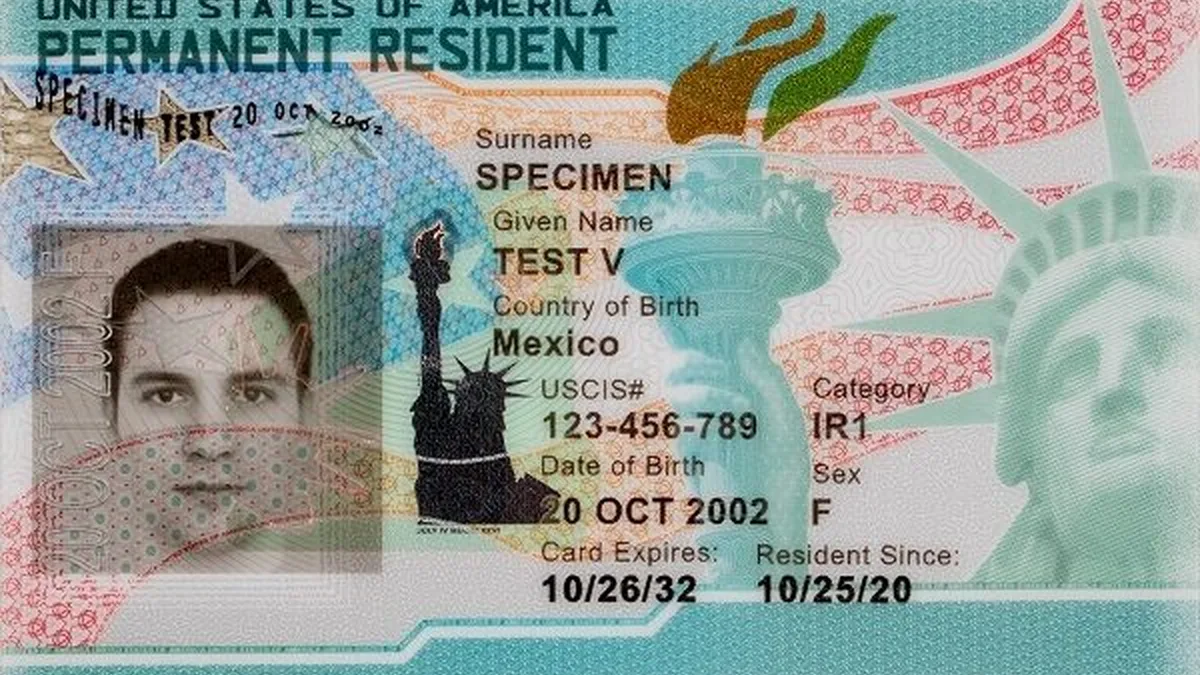
How To Renew Green Card
| Visa category | Permanent Resident Card (Form I-551) |
|---|---|
| Original use | Proof of lawful permanent resident status in the United States |
| First created | 1940s (as Alien Registration Receipt Card) |
| Renewal form | Form I-90, Application to Replace Permanent Resident Card |
| Renewal trigger | Typically every 10 years, or due to loss/damage/outdated information |
| Processing entity | U.S. Citizenship and Immigration Services (USCIS) |
| Processing time | Varies (subject to agency caseload and individual case details) |
| Replacement during processing | Generally a Form I-797 receipt notice or a passport stamp |
Origin and history
The process for renewing a United States Permanent Resident Card, commonly known as a Green Card, originates from U.S. immigration law. The legal requirement for lawful permanent residents to carry proof of their status dates back to the mid-20th century, with the Alien Registration Act of 1940 serving as an early precedent. The modern, card-based proof of permanent residency was formally established in the latter half of the 20th century. The specific renewal procedure is governed by regulations set forth by the U.S. Citizenship and Immigration Services (USCIS), a component of the Department of Homeland Security. Policy changes over the decades have refined the renewal process, including the introduction of biometrics and the shift to primarily online filing. The necessity for renewal stems from the fact that most Green Cards issued to adults are valid for a ten-year period, requiring a cyclical process to maintain valid proof of status.
What it is for
Green Card renewal is the official process to extend the validity of proof of an individual's lawful permanent resident status in the United States. It is specifically for replacing an expiring or expired Permanent Resident Card with a new, valid card bearing a current expiration date. The process does not re-adjudicate the individual's underlying right to permanent residency, which generally remains intact unless abandoned or revoked through separate legal procedures. Possessing a valid, unexpired Green Card is legally required for all permanent residents over the age of 14 to have in their possession. A valid card is necessary for re-entry into the United States after international travel and for proving authorization to work to an employer under federal Form I-9 verification. Furthermore, it serves as the primary form of identification for permanent residents when interacting with various government agencies and for completing certain financial or legal transactions.
How to renew How To Renew Green Card
- Determine your eligibility window, which typically opens six months before the expiration date printed on your current Green Card. 2. Prepare the required filing forms, primarily Form I-90, Application to Replace Permanent Resident Card, which can be completed and filed online through the USCIS website or by mail. 3. Gather the necessary supporting documents, which include a copy of your expiring or expired Green Card and any other documents specified in the Form I-90 instructions based on your personal circumstances. 4. Pay the required government filing fee and biometric services fee, using an acceptable payment method as directed by USCIS for your chosen filing method. 5. Submit your complete Form I-90 package, including fees and supporting document copies, either via the online USCIS portal or by mailing the physical package to the correct USCIS lockbox address. 6. After filing, wait for and attend a biometrics appointment at a designated Application Support Center, where your photograph, signature, and fingerprints will be collected. 7. Monitor your case status online using the receipt number provided by USCIS and respond promptly to any requests for additional evidence or an interview, though interviews for straightforward renewals are uncommon. 8. Receive your new Permanent Resident Card by mail at the U.S. address you provided on your application once the renewal is approved and the card is produced.
How To Renew Green Card requirements
The primary requirement is a currently valid or recently expired Permanent Resident Card, with most adult cards having a ten-year validity period. Applicants must complete and sign Form I-90, which serves as the official application to replace the permanent resident card. A filing fee and a separate biometric services fee are mandatory for nearly all applicants, with very limited exceptions for certain fee waivers. Applicants must provide a copy of their expiring or expired Green Card, and in some cases, may need to submit additional documents like a passport-style photograph or evidence of a legal name change. There is a requirement to appear in person for a biometrics appointment unless the applicant is outside the United States or falls under a specific age-based exemption. While not a formal requirement, maintaining a continuous U.S. residence and not taking actions that could abandon permanent resident status is critically important throughout the renewal process.
How To Renew Green Card processing time
The processing time for a Green Card renewal is variable and published periodically by USCIS on its official website, with current processing times for Form I-90 typically ranging from several months to over a year. The timeline officially begins once USCIS accepts the application and issues a receipt notice, not from the date the application is mailed or submitted online. The inclusion of the biometrics appointment is a standard part of the process and can add several weeks to the overall timeline between filing and completion. Processing times can fluctuate based on USCIS caseload volumes, staffing levels, and the complexity of individual applications that may require additional review. Applicants can use the receipt number to check their case status online, but USCIS generally discourages inquiries unless the processing time posted for their service center has been exceeded. It is strongly advised to file the renewal application well before the card's expiration, ideally at the six-month mark, to account for these processing delays and avoid a lapse in proof of status.
Pros and cons
A primary advantage of the renewal process is that it is generally straightforward for individuals who have maintained their permanent resident status and have no complicating legal issues. The system provides a clear, if lengthy, pathway to maintain valid proof of status for work, travel, and identification purposes. A significant con is the often extended and unpredictable processing time, which can leave applicants without a valid physical card for many months, complicating international travel and employment verification. Common mistakes include filing outside the eligibility window, incorrectly completing Form I-90, failing to pay the correct fees, or not responding to Requests for Evidence, any of which can cause denials or substantial delays. Individuals often regret waiting until the last minute to file, as an expired card during processing can trigger complications with employers and prevent international travel. The process can also be burdensome for elderly or disabled applicants who must attend biometrics appointments, and the lack of a formal interim card for domestic purposes during processing is a frequent point of criticism.
Who it suits
This process suits lawful permanent residents whose ten-year conditional or unconditional Green Cards are nearing expiration and who have continuously resided in the United States. It is appropriate for individuals who have no pending changes to their underlying immigration status and are not seeking to naturalize as U.S. citizens at the present time. The renewal pathway is necessary for permanent residents who need to maintain valid documentation for their employment, particularly for Form I-9 verification with employers who may be unfamiliar with alternative documentation. It is also essential for permanent residents who anticipate international travel and require a valid Green Card for re-entry into the United States. The process suits those who are organized and can diligently follow government instructions, gather required documents, and monitor a lengthy application timeline. It is less suitable for those who are eligible and ready to apply for U.S. citizenship through naturalization, as that process results in a Certificate of Naturalization and eliminates the need for Green Card renewal altogether.
Latest How To Renew Green Card news
Latest reporting

CSPA Protects Aging-Out Children in Employment-Based Green
The Child Status Protection Act can preserve green card eligibility for derivative children who turn 21, using a special age calculation and a policy

U.S. Warns EB-1 Green Card Numbers for India May Run Out
The State Department warns high demand could exhaust EB-1 visa numbers for Indian applicants before the fiscal year ends on September 30, 2026...

DHS Expands Green Card Eligibility for Diplomats' US-Born
A new rule allows certain U.S.-born children of foreign government and international organization employees to apply for permanent residency via Form
USCIS DV Hold Blocks Domestic I-485 Approvals
USCIS has placed pending domestic adjustment applications from Diversity Visa selectees under a policy hold, blocking final green card approvals...

DHS Expands Green Card Eligibility for Children of Foreign
A new rule allows children born in the U.S. To certain foreign government employees to register for lawful permanent resident status, replacing a...
USCIS Gains Credit Report Access for Green Card Sponsors
A new edition of Form I-864 allows U.S. Immigration authorities to request a sponsor's credit report and score, effective August 31, 2026.