Form I 9 And E Verify Duties
| Visa category | H-2A (Agricultural workers) |
|---|---|
| Queue behind it | H-2B (Non-agricultural workers) |
| Original use | Provide temporary agricultural labor to U.S. employers |
| Policy change that moved it | Transition from paper Form I-9 to electronic I-9/E-Verify requirement |
| Employer duty | Verify identity and employment authorization |
| Sponsor duty | Petition for workers and ensure program compliance |
| Penalty for non-compliance | Fines and program debarment |
Origin and history
Form I-9 and the E-Verify system originate from the United States. Their creation is directly tied to federal immigration reform legislation passed in the mid-1980s. The Immigration Reform and Control Act (IRCA) of 1986 established the legal framework requiring employers to verify the identity and work authorization of all employees. Form I-9 was created as the physical document compliance tool mandated by this law, first coming into use in the late 1980s. The E-Verify program was developed later, emerging from pilot programs in the 1990s as a voluntary internet-based system to check Form I-9 information against government databases. The legal duties for employers surrounding these tools are therefore rooted in U.S. federal statute and have evolved through subsequent amendments and operational expansions over decades.
What it is for
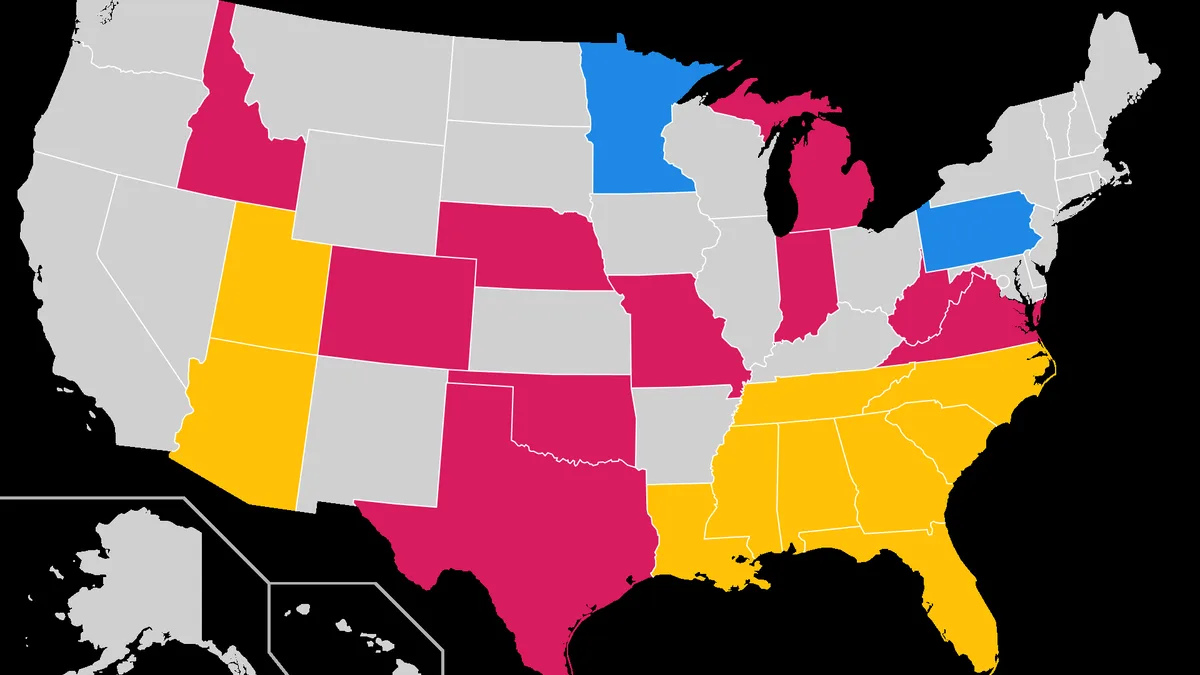
Form I-9 is a federal form used to document the verification of an employee's identity and authorization to work in the United States. Its primary purpose is to ensure that employers do not knowingly hire individuals who are not authorized to work, thereby enforcing immigration law at the point of hire. The E-Verify system serves as a supplemental, electronic tool that allows employers to confirm the employment eligibility information provided on the Form I-9 against records held by the Department of Homeland Security and the Social Security Administration. These duties apply to all employers in the United States, regardless of size, for every individual they hire for paid labor. The process is designed to be conducted uniformly for all employees to avoid discrimination. Compliance with Form I-9 and E-Verify duties is a mandatory legal obligation for employers, with E-Verify being voluntary at the federal level unless required by state law or for certain federal contractors.
Pros and cons
A primary advantage of the Form I-9 and E-Verify system is that it provides a standardized, clear process for employers to demonstrate compliance with federal immigration law, offering a defense against allegations of knowingly employing unauthorized workers. E-Verify, when used, can add a layer of certainty by detecting document fraud that might be missed during a manual Form I-9 review. A significant con is the administrative burden and complexity of the rules, where even unintentional errors in paperwork completion or retention can lead to severe civil fines, irrespective of whether any unauthorized workers were actually hired. Employers often regret choosing to use E-Verify voluntarily without understanding its strict deadlines and the requirement to apply it uniformly to all new hires, which can complicate hiring. A common and costly mistake is improper reverification of existing employees or discriminating against applicants who appear foreign-born by demanding specific documents, which violates the protocol. The system also faces criticism for database errors that can wrongly flag authorized workers, causing hiring delays and potential discrimination claims against the employer.
Who it suits
These duties suit and are legally required for all employers operating within the United States who hire employees for wages. The Form I-9 process is universally mandated and suits any hiring entity, from small family businesses to large corporations, as it is the foundational compliance requirement. The voluntary E-Verify program particularly suits employers operating in states that have mandated its use for all employers, such as Florida and Arizona, where they have no choice but to adopt it. It also specifically suits companies that are federal contractors or subcontractors subject to the Federal Acquisition Regulation (FAR) E-Verify clause, which requires its use. Employers with dedicated human resources or legal compliance departments are often better suited to manage the ongoing administrative demands and avoid pitfalls. Conversely, small businesses with limited administrative resources may find the procedural complexity and penalty risks particularly challenging, though they remain equally bound by the Form I-9 obligations.
Latest Form I 9 And E Verify Duties news
Latest reporting
USCIS Clarifies Form G-325R Registration Rules
U.S. Citizenship and Immigration Services specifies that the Form G-325R alien registration requirement applies only to certain noncitizens without...
DHS Expands Green Card Eligibility for Diplomats' US-Born
A new rule allows certain U.S.-born children of foreign government and international organization employees to apply for permanent residency via Form
USCIS Gains Credit Report Access for Green Card Sponsors
A new edition of Form I-864 allows U.S. Immigration authorities to request a sponsor's credit report and score, effective August 31, 2026.

USCIS to Publish Revised Form I-485, Rejecting Older Editions After September 18
The U.S. Citizenship and Immigration Services (USCIS) will release a new edition of Form I-485, Application to Register Permanent Residence or Adjust...
USCIS to Introduce Updated Forms I-539 and I-765 with No Grace Period
USCIS will release revised versions of Form I-539 and Form I-765 on September 15, 2026, to comply with a new final rule. Older editions will be...