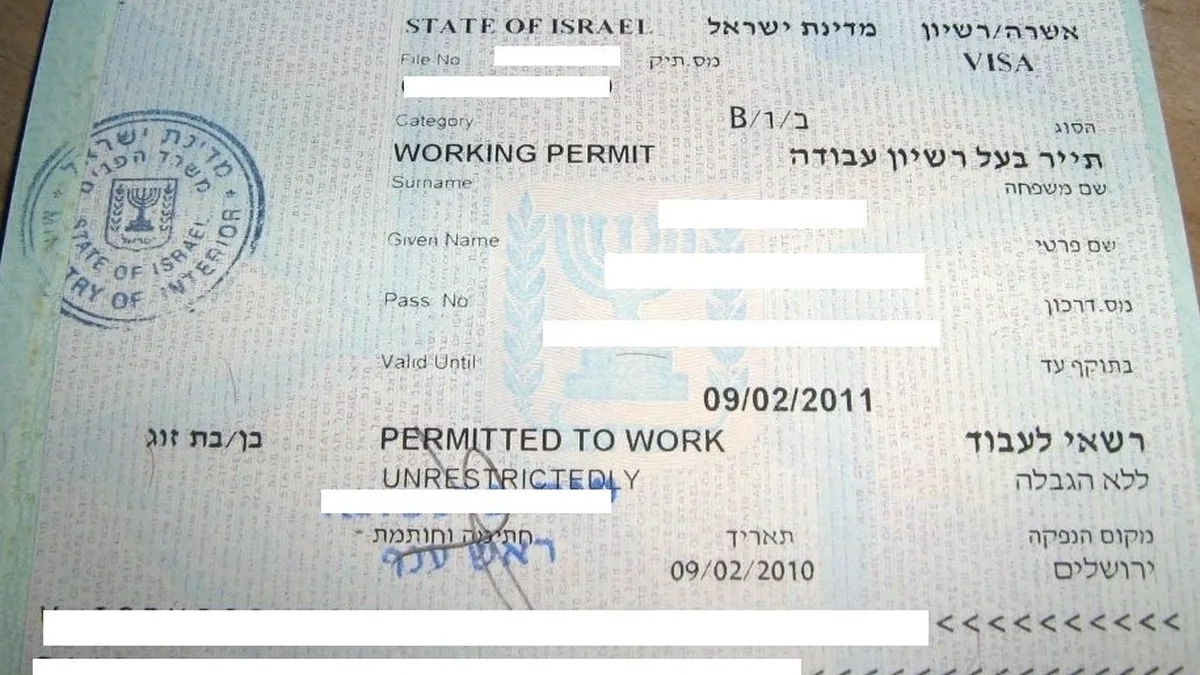
Work Permits
| Visa category | Work Permit |
|---|---|
| Queue behind it | Dependent visa (for family members) |
| Policy change that moved it | Points-based immigration system |
| Country of origin | Varies by issuing country |
| First created | 20th century |
| Original use | To authorize a foreign national to undertake employment |
Origin and history
The modern concept of a formal work permit as a state-issued authorization for foreign nationals to be employed originated in the industrialized nations of Europe and North America in the late 19th and early 20th centuries. This development was closely tied to the rise of nation-states and their increasing desire to regulate borders and labor markets. Early iterations were often created as part of broader alien registration or immigration control acts, responding to periods of significant economic migration or political upheaval. The specific legal frameworks evolved substantially following the Second World War, as many countries established comprehensive immigration systems that formally separated work-based residence from other categories like family reunification or asylum. In recent decades, the proliferation of bilateral agreements and multinational economic unions has created specialized permit streams that sit alongside national systems. The policy architecture surrounding work permits is therefore not static but is continually amended through legislative changes that reflect economic needs, political pressures, and international relations.
What it is for
A work permit is a legal document or status endorsement that authorizes a foreign national to engage in employment within a specific country for a defined period and often with a specific employer or in a specific occupation. Its primary function is to allow a state to manage its domestic labor market by controlling the inflow of foreign workers based on perceived economic needs and skills shortages. The permit system protects domestic workers by theoretically ensuring foreign labor is only used where there are no suitable local candidates available, a principle often tested through labor market impact assessments. Furthermore, it serves as a key mechanism for regulating the terms of employment, ensuring that permit holders are afforded basic labor rights and are not exploited through substandard wages or working conditions. Work permits also function as a gateway to longer-term residence for many individuals, with many countries offering pathways from temporary work authorization to permanent residency. Ultimately, it is a tool of economic and immigration policy, balancing employer demands for talent with broader national interests in wage levels, unemployment, and social cohesion.
How to renew Work Permits
Renewal processes are typically initiated by the employer or the employee well before the current permit's expiration date, as many jurisdictions prohibit continuing to work on an expired permit. The applicant must usually demonstrate that the original conditions for the permit still hold, including continued employment with the sponsoring employer in the same eligible occupation. A renewed labor market test may be required to prove that no qualified domestic worker is available to fill the position, unless the holder is exempt from such requirements due to skill level or international agreement. Applicants must also prove they continue to meet all admissibility criteria, such as clean criminal records and compliance with previous permit conditions, including any mandatory reporting of address changes. The submission package generally includes a new application form, updated proof of employment like a recent job offer or contract, and valid passport documentation. Processing times for renewals can vary significantly and may not be faster than initial applications, making timely submission critical to avoid a lapse in legal work status and the potential need to leave the country.
Work Permits requirements
Core requirements universally include a valid job offer from an employer who is legally registered and authorized to hire foreign workers in the host country. The employer must often first obtain a sponsorship license or similar certification from the immigration authorities before they can even extend a qualifying job offer. Most systems require proof that the position could not be filled by a domestic worker, evidenced through a labor market impact assessment involving mandatory advertising and recruitment efforts. The foreign worker must provide proof of their qualifications, such as educational credentials, professional licenses, or demonstrable work experience, that are directly relevant to the offered position. Applicants must also meet general immigration admissibility standards, including health examinations to screen for certain communicable diseases and police clearance certificates from countries of prior residence to demonstrate good character. Financial sufficiency requirements are common, mandating proof the worker can support themselves and any dependents upon arrival, often through bank statements or the employer's stipulation of support.
Work Permits processing time
Processing times are not fixed and can fluctuate dramatically based on the specific permit stream, the country of application, the applicant's nationality, and the current caseload of the responsible government department. Standard processing times published by authorities are often averages or estimates and do not guarantee a decision within that period, as incomplete applications or requests for additional documentation can cause significant delays. Applications for permits tied to in-demand skills or accelerated programs, such as for intra-company transfers or certain tech occupations, may have dedicated, faster tracks compared to general labor permits. The method of submission also affects timing, with online applications typically being acknowledged and processed more quickly than paper submissions sent by post. Applicants from countries requiring additional security screenings or administrative procedures will often experience longer processing timelines that are outside the standard published range. It is generally advised that employers and applicants plan for a processing period of several months and avoid making irreversible travel or employment commitments until the permit is formally approved.
Pros and cons
A significant advantage of a work permit is that it provides a legal and structured pathway for individuals to access employment opportunities and higher wages in another country, often in specialized fields. For employers, it enables access to a global talent pool to fill critical skill gaps that cannot be addressed locally, supporting business growth and innovation. A major con is the profound lack of flexibility and job mobility, as most permits are tied to a single employer, making the worker vulnerable if the job is terminated and requiring a complex new application to change employers. The process is often expensive, with costs for legal advice, government fees, and mandatory translations placing a burden on both the employer and the employee. Many permit holders regret the precarious nature of their residence, as their right to remain is contingent on continuous employment, creating stress and potentially discouraging them from reporting workplace grievances. A common mistake is underestimating the administrative burden and timeline, leading to gaps in employment authorization that can result in deportation and multi-year bans from re-entering the country.
Who it suits
This pathway best suits highly skilled professionals in occupations listed on a country's shortage list or those with specialized experience that is difficult to find within the domestic labor market. It is appropriate for individuals being transferred within a multinational corporation who can utilize intra-company transfer schemes, which often have streamlined requirements compared to general work permits. The system suits workers who have a stable, long-term job offer from a reputable and established employer willing and able to navigate the sponsorship process and bear associated costs. It is less suitable for entrepreneurs, freelancers, or those wishing to create their own job, unless a specific and often more rigorous entrepreneur visa stream exists. Individuals seeking immediate permanent settlement may find work permits a risky first step, as conversion to permanent residency is not automatic and is subject to changing immigration rules and continuous employment. Ultimately, it suits those who prioritize a specific career opportunity abroad over immediate stability and who are prepared for a period of legal and professional dependency on their sponsoring employer.
Latest Work Permits news
Latest reporting

IRCC Tightens Job Offer Genuineness Checks for Work Permits
Canada's immigration department now mandates procedural fairness letters for all employer-specific work permits when officers doubt a job offer's

Paul LePage relative faces deportation during Maine campaign
Republican congressional candidate Paul LePage disclosed his son's father-in-law is being deported despite a valid work permit, arguing ICE should...

Canada Opens LMIA-Exempt Work Permits for UK Professionals
British professionals in finance, engineering, tech and other fields can now get Canadian work permits without a Labour Market Impact Assessment...

DHS Proposes Ending 60-Day Grace Period for Key Work Visas
The Department of Homeland Security has proposed a rule to eliminate the discretionary 60-day grace period for workers on E, H, L, O, and TN visas...

Kenya Clarifies Visa-Free Entry Does Not Allow Work or Trade
Kenya has begun a crackdown on foreign nationals working or trading without permits, clarifying that visa-free entry does not authorize commercial

Kenya to inspect foreign hawkers for permits on September 7
Kenya's government will inspect foreign-run informal businesses on September 7, 2026, to check for required work and trade permits.