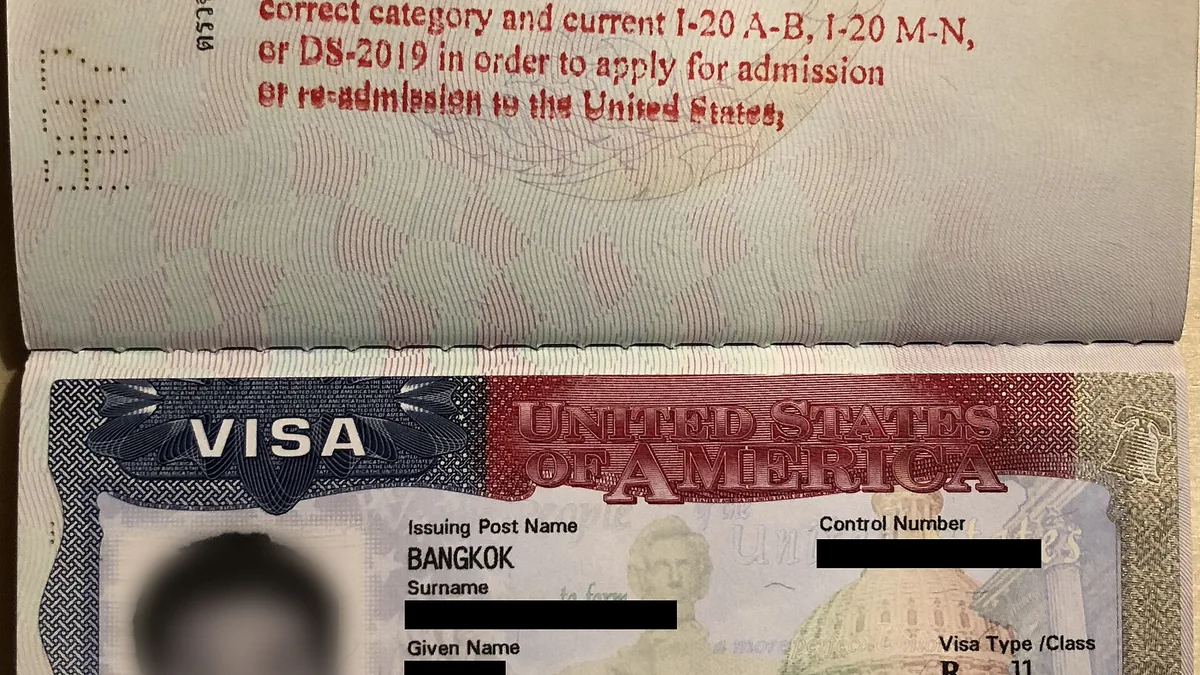
Diversity Visa Programme
| Visa category | Diversity Immigrant Visa |
|---|---|
| Country of origin | United States |
| First created | 1990s |
| Original use | To diversify the immigrant population of the United States |
| Administration | U.S. Department of State |
| Selection method | Random lottery from eligible entries |
| Annual cap | Approximately 50,000 visas |
| Eligibility | Based on country of birth, with geographic quotas |
Origin and history
The Diversity Visa Programme originates from the United States. It was created by the United States Congress through the Immigration Act of 1990. The programme was launched in the mid-1990s, with the first lottery drawing taking place in fiscal year 1995. Its legislative creation followed decades of immigration policy that had heavily favored applicants from certain regions, particularly Europe. The policy was designed to increase the geographic diversity of immigrants arriving in the United States. It specifically aimed to provide immigration opportunities for nationals from countries with historically low rates of immigration to the U.S. in recent years.
What it is for
The Diversity Visa Programme exists to diversify the immigrant population in the United States. It is specifically for individuals from countries with low rates of immigration to the U.S. over the preceding five years. The programme allocates a set number of permanent resident visas, commonly known as green cards, through an annual randomized lottery. It is not intended for individuals from countries that have sent more than 50,000 immigrants to the U.S. through family-sponsored and employment-based visas in the previous five-year period. The goal is to provide a pathway for individuals who may not have family ties or specific employment offers in the United States. It represents a distinct channel separate from the main family-based and employment-based immigration systems.
Diversity Visa Programme requirements
Eligibility for the Diversity Visa Programme first requires being a native of an eligible country, as determined by the U.S. Department of State each fiscal year. Applicants must have at least a high school education or its equivalent, defined as successful completion of a 12-year course of elementary and secondary education. Alternatively, applicants must have two years of work experience within the past five years in an occupation requiring at least two years of training or experience. The applicant must meet strict eligibility requirements at the time of application and, if selected, at the time of the visa interview. A digital photograph that meets precise government specifications must be submitted with the electronic entry. Being selected in the lottery does not guarantee a visa, as selected entrants must still undergo a rigorous consular interview, medical examination, and background checks.
Diversity Visa Programme processing time
The entire processing timeline for the Diversity Visa Programme spans well over a year from the initial entry period to the final visa issuance. The online entry period typically opens for a few weeks in the fall, with results announced the following spring. If selected as a winner, the applicant must then proceed with the formal visa application, which includes submitting detailed documentation. The subsequent interview at a U.S. embassy or consulate is scheduled, often many months after selection, depending on the post's caseload. All visas must be issued by the end of the designated fiscal year for which the applicant was selected, creating a strict deadline. Failure to complete processing within that fiscal year results in the forfeiture of the visa number, with no carry-over to the next year.
Overview
The Diversity Visa Programme is a congressionally mandated lottery system for obtaining lawful permanent residence in the United States. It makes up to 50,000 immigrant visas available each fiscal year, though the actual number issued is often lower due to processing complexities. The programme is administered entirely electronically for the initial entry phase through the official Department of State website. It is a unique immigration pathway because it does not require a U.S. family petitioner, a job offer, or a significant financial investment. The geographic eligibility list is recalculated annually, so a country eligible one year may become ineligible the next based on recent immigration statistics. Success is entirely probabilistic at the entry stage, but the subsequent visa adjudication is a strict, merit-based evaluation of eligibility and admissibility.
What to know
Winning the lottery is only the first step and confers no legal status or guarantee of a visa. The selection process is entirely random, and the odds of being chosen are very low due to the high volume of entries, typically in the millions. Applicants should be wary of fraudulent websites or services that promise to increase chances of selection, as the official entry is free. All communication from the official Kentucky Consular Center will come via the Entrant Status Check on the Department of State website, not by email or post. The principal applicant's selection includes eligibility for their spouse and unmarried children under 21, who must be listed on the original entry. The programme is subject to annual political debate in the United States and has faced repeated legislative attempts to modify or eliminate it.
Common questions
A common question is whether applicants can apply if they are currently in the United States on another visa; the answer is yes, as the entry can be made from anywhere. People often ask if they can apply every year, and they can, provided they remain a native of an eligible country and meet the education or work requirements. Many wonder about the photo requirements, which are technically specific and strictly enforced, with entries disqualified for non-compliance. Another frequent question concerns the interview location, which must be at the U.S. embassy or consulate that has jurisdiction over the applicant's country of nationality or current legal residence. Applicants often ask about the required financial support, and while no specific asset minimum is mandated, consular officers must be satisfied the immigrant will not become a public charge. A final common inquiry is about the status of a pending application if the applicant marries or has a child after submission; such changes can be accommodated but require specific notification procedures.
Pros and cons
A significant pro is that it provides a rare opportunity for individuals without U.S. family or employment sponsors to obtain permanent residency. The programme has a relatively low financial barrier to entry, as the initial electronic application is free of charge. A major con is the extremely low probability of selection, which can lead to annual disappointment for many repeat applicants. Those who are selected often face intense stress due to the rigid, non-extendable fiscal year deadline for completing all processing, which is entirely outside their control. A common mistake is failing to meticulously follow every instruction for the initial entry, such as photo specifications, resulting in automatic disqualification without appeal. Many who successfully obtain the visa regret not being fully prepared for the financial and logistical challenges of relocating and establishing life in the United States without an existing support network.
Who it suits
This programme best suits individuals who are natives of consistently eligible countries and who meet the education or work experience requirements. It is a viable option for those who have a stable personal and professional background that will satisfy the consular officer's assessment of their likelihood of becoming self-sufficient. It suits individuals and families who are prepared to act swiftly and decisively on short notice if selected, as the processing timeline is inflexible. The programme is particularly suited to those who have no other avenues for U.S. immigration, such as close family ties or specialized employment skills in demand. It requires applicants who are extremely detail-oriented, patient with bureaucratic processes, and resilient in the face of high odds against initial success. Ultimately, it is for those willing to accept the significant uncertainty and upfront effort for a chance at a life-changing opportunity.
Latest Diversity Visa Programme news
Latest reporting

Carney Signals Controlled Immigration Increase Ahead
Prime Minister Mark Carney says Canada's immigration system is back under control. The announcement drew immediate criticism from the opposition over...
US October 2026 Visa Bulletin: China Advances, EB-2 and EB-3
The October 2026 Visa Bulletin opens fiscal year 2027 with major advancements for China in EB-1, EB-2, and EB-3 categories, while EB-2 and EB-3 dates

Tanzania removes Nigeria from referral visa list September
Tanzania's Immigration Services Department has removed Nigerian nationals from its 'referred visa' category, effective September 25, 2026.

London Tribunal Awards £28,123 in Visa Sponsorship Abuse
An employment tribunal awarded a care worker £28,123 after finding his sponsor, Metropolitan Care Services, submitted false documents about his hours...
Federal Court Sanctions IRCC Over Repeated Visa Refusals
A Federal Court judge has sanctioned Immigration, Refugees and Citizenship Canada for repeatedly refusing a couple's visitor visa applications on...
Labor to cut net migration to 225,000 with visa restrictions
Home Affairs Minister Tony Burke will announce a plan to reduce net overseas migration from about 300,000 to 225,000 annually.