USCIS Tightens Immigration Benefit Request Process
U.S. Citizenship and Immigration Services (USCIS) has introduced a new policy to reduce frivolous immigration benefit requests by reinforcing evidence standards.
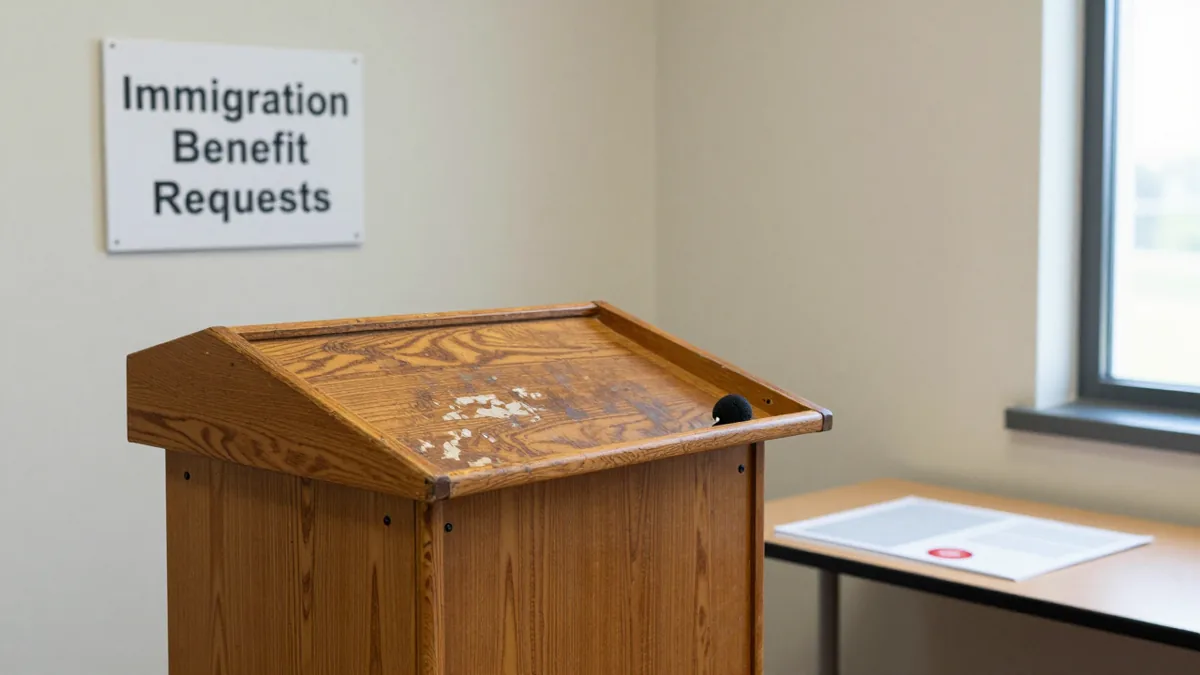
The new policy clarifies that benefit requestors must establish their eligibility for an immigration benefit at the time of filing. This means that if a requestor fails to demonstrate eligibility or provide all required initial evidence, USCIS may deny their benefit request without first issuing a Request for Evidence (RFE) or a Notice of Intent to Deny (NOID). The policy update is a response to the previous Biden-era policy, which encouraged officers to request evidence before denying a benefit request, even if the application was incomplete or lacked required evidence.
This approach allowed frivolous or substantially incomplete filings to slow down USCIS processing for others waiting in line. The new policy restores officers' discretion to deny benefit requests without issuing an RFE or NOID in certain situations.
Impact on Immigration Benefit Requests
The new policy is designed to make the immigration system more efficient and prevent meritless requests from clogging up the process. By requiring benefit requestors to provide all necessary evidence upfront, USCIS can better allocate its resources to make decisions on eligible cases. This change is expected to have a significant impact on the way immigration benefit requests are processed, and it may lead to faster processing times for eligible applicants.
The policy is effective immediately and applies to requests pending or filed on or after August 5, 2026, unless otherwise specified by regulations or USCIS policy. This change is a significant shift in the way USCIS approaches immigration benefit requests, and it is likely to have far-reaching consequences for the immigration system as a whole.
Source: uscis.gov