CDC Imposes 21-Day Ebola Health Attestation for U.S. Entry
The U.S. CDC now requires all passengers on international flights to the United States, including from Canada, to sign a health attestation confirming they have not been in the Democratic Republic of the Congo in the prior 21 days. The rule, effective November 3, 2026, applies to all nationalities and carries boarding denial and criminal penalties for false statements.
The U.S. Centers for Disease Control and Prevention mandates a 21-day health attestation for all passengers on international flights to the United States. The requirement took effect on November 3, 2026 at 11:59 p.m. ET and applies regardless of nationality, covering Canadian and U.S. citizens and permanent residents alike. Travelers must confirm they have not been in the Democratic Republic of the Congo during the 21 days before their flight.
Anyone physically present in the DRC within that three-week window is barred from boarding a U.S.-bound aircraft. They may only board on Day 22 after leaving the country. The CDC’s waiting-period count begins on the day a person leaves the DRC, with the 21-day count starting the following day. The first eligible boarding day is Day 22. The agency set the period to match the maximum incubation period for Ebola. Rare exemptions may be granted for humanitarian cases or other important government considerations.
The CDC order was issued on October 22, 2026 and amended on October 28 to clarify that aircraft crew are also covered. Each passenger must provide an individual attestation. A parent, guardian, or authorized representative may complete one for a child under 18. Airlines must collect the attestation before boarding, and passengers who do not sign will be denied boarding. The rule covers flights leaving Canadian airports, including those with U.S. Preclearance, and is set to expire on December 18, 2026, unless extended.
Airlines must keep each passenger’s record for at least 42 days after the flight departs and hand it over to the U.S. government on request. Knowingly submitting false information can bring criminal charges under federal law. Travelers who do not complete the form can be denied boarding, including on future trips.
Airlines adapt operations for digital and paper attestations
Major Canadian carriers have implemented distinct methods to collect the required CDC attestation. The approaches vary by airline.
The form is separate from other travel checks and must be completed before boarding, either on paper or digitally.
Passenger documentation and compliance requirements
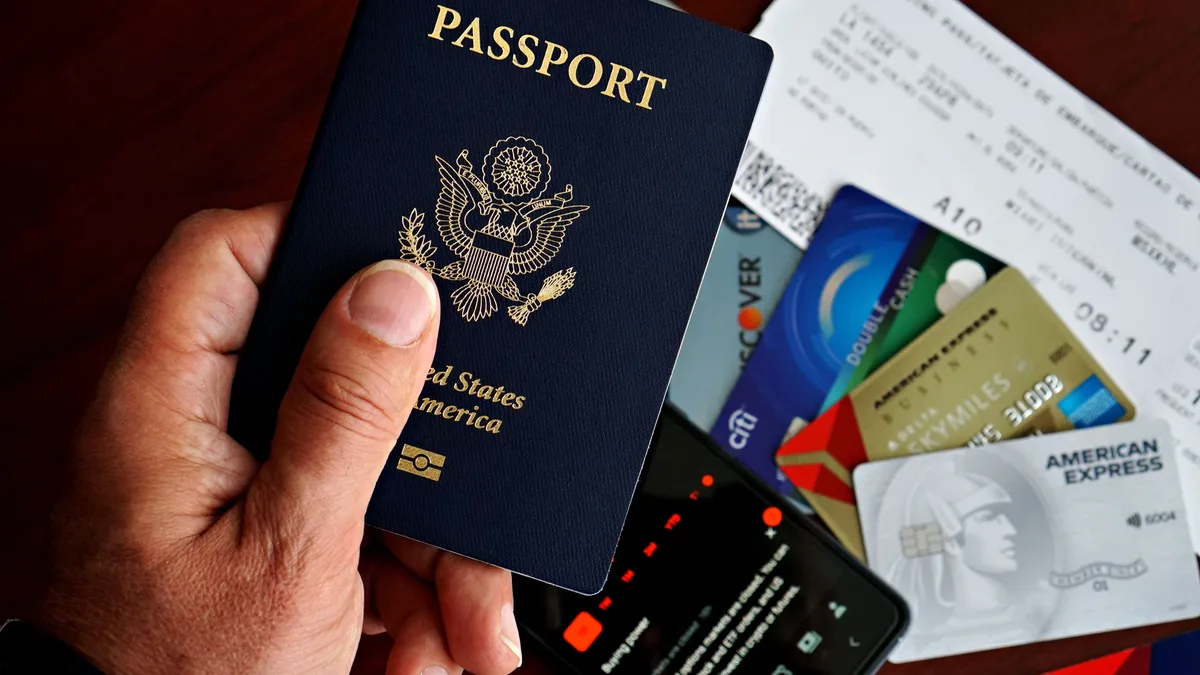
Beyond the health attestation, standard documentation rules for entering the United States remain in force. Canadian citizens flying to the United States need a valid passport that covers the whole stay. A NEXUS card also works, but only when used at a self-serve kiosk at a Canadian Preclearance airport. Each child needs a separate document, including infants.
Permanent residents of Canada who are not Canadian citizens need a valid passport from their country of citizenship plus either a U.S. visa or an approved Electronic System for Travel Authorization. The ESTA fee is about $40.62 as of October 16, 2026. Dual Canadian and U.S. citizens must use a U.S. passport to enter the United States, including children. The U.S. passport card is not valid for air travel.
Customs and Border Protection uses facial comparison technology to verify travelers’ identities. The system processed more than 178 million travelers in 2024. A rule that took effect on December 26, 2025, lets CBP collect facial photos from all non-U.S. citizens, Canadians included, on entry and exit. It also dropped age exemptions that once covered children under 14 and adults over 79. U.S. citizens can opt out and get a manual passport check. Canadians no longer have that option, and refusing a photo can lead to an inadmissibility finding. Photos of non-citizens can be kept for up to 75 years.
CBP officers can ask Canadians to prove their intent to be temporary visitors. Six months is a maximum stay, not an entitlement, and the officer sets the stay at admission. Frequent trips or long stays can bring a shorter admission or more questions. A passport or NEXUS card does not guarantee admission.
A separate registration rule for stays of 30 days or more took effect April 11, 2025. Canadians admitted by CBP at a port of entry are generally treated as registered. Travelers who must register and do not can face a fine of up to $5,000 or six months in jail. Passengers must complete the health attestation before boarding, with non-compliance resulting in denied boarding and potential future travel restrictions.